The Maya Train, known locally as the Tren Maya, has become a defining factor in the real estate dynamics of the Riviera Maya, influencing everything from property values to urbanization patterns. This extensive rail project designed to connect key tourism and cultural hubs across southeastern Mexico offers unprecedented connectivity and accessibility, thereby reshaping the investment landscape in 2026. While the clear benefits of enhanced transportation access and economic growth are evident, the impact on real estate prices varies significantly by location and type of investment. Understanding these nuances is crucial for anyone interested in capitalizing on the evolving property market in this region, which balances traditional beach-town allure with incoming infrastructure development and growing tourism impact.
Envisioned as a catalyst to unlock the full economic potential of Quintana Roo and neighboring states, the Maya Train promises to integrate underserved areas into booming tourist circuits, dramatically changing local real estate prospects. However, the influence on property value is not uniform. Urban centers like Cancun continue to demonstrate stability and liquidity with modest appreciation, while up-and-coming towns along the route, such as Bacalar and Puerto Morelos, exhibit higher growth potential but generally lower liquidity. For investors and homebuyers alike, the Maya Train presents both immediate opportunities and long-term gains, tightly linked to the train’s proximity and complementary regional infrastructure.
- Proximity Effect: Property values within 5 kilometers of Maya Train stations have seen an annual appreciation ranging between 10% and 20%.
- Varied Market Maturity: Mature markets like Cancun have more stable price increases (+3-5%) compared to emerging towns benefiting from greater infrastructure development.
- Investment Opportunities: Coastal towns and emerging cultural destinations along the train’s route offer diverse investment profiles, from vacation rental income to long-term appreciation.
- Urbanization and Accessibility: The Maya Train enhances urban integration, broadening access to remote areas but still faces challenges like last-mile transportation.
- Tourism Impact: The train facilitates increased domestic tourism, crucial for boosting demand in locations previously less accessible to visitors.
Maya Train and Its Strategic Role in Infrastructure Development and Real Estate Prices
The Maya Train represents one of the most ambitious infrastructure undertakings in Mexico in recent decades, stretching across 1,554 kilometers and linking vital cultural and economic nodes in Chiapas, Tabasco, Campeche, Yucatán, and Quintana Roo. Operational since 2024, the rail project has swiftly become a cornerstone for economic growth and urbanization in the region. As it incorporates 20 main stations along with 14 stops, the train is a transformative asset, especially in the Riviera Maya corridor where tourism and real estate are heavily intertwined.
From an investment standpoint, the Maya Train’s influence on real estate prices can be understood through the lens of transportation access and connectivity—a well-documented driver of property appreciation worldwide. Mass transit systems historically enhance accessibility to previously hard-to-reach areas, allowing for population dispersal, commercial expansion, and a higher demand for housing near transit hubs.
In the Riviera Maya, this translates not only to better connectivity between major centers like Cancun, Playa del Carmen, and Tulum but also opens new frontiers in towns such as Puerto Morelos and Bacalar. Properties in close proximity to Maya Train stations have enjoyed significant gains, with reported increases of 10% to 20% annually in these zones, compared to a general regional appreciation average between 7% and 9% in other areas. This differential highlights the direct correlation between proximity to the Maya Train and real estate price dynamics.
Despite the broad impact, the train’s influence is highly localized. Market research indicates the strongest property value increases occur within a 5-kilometer radius of station hubs, tapering off to moderate growth between 5 and 10 kilometers, and becoming negligible beyond that. This fact underscores the importance of strategic property selection near these stations to maximize investment returns.
The Tren Maya thus acts as a vital artery for economic activity, but its benefits are best leveraged when combined with complementary infrastructure such as highways, airports, and urban services. For example, Tulum’s dual connectivity via the train and its newly opened airport has driven property value increases exceeding 18-25% since 2023, showcasing an interplay between multiple infrastructure elements amplifying real estate growth. Investors evaluating the area should carefully consider such infrastructure synergies to make informed decisions.
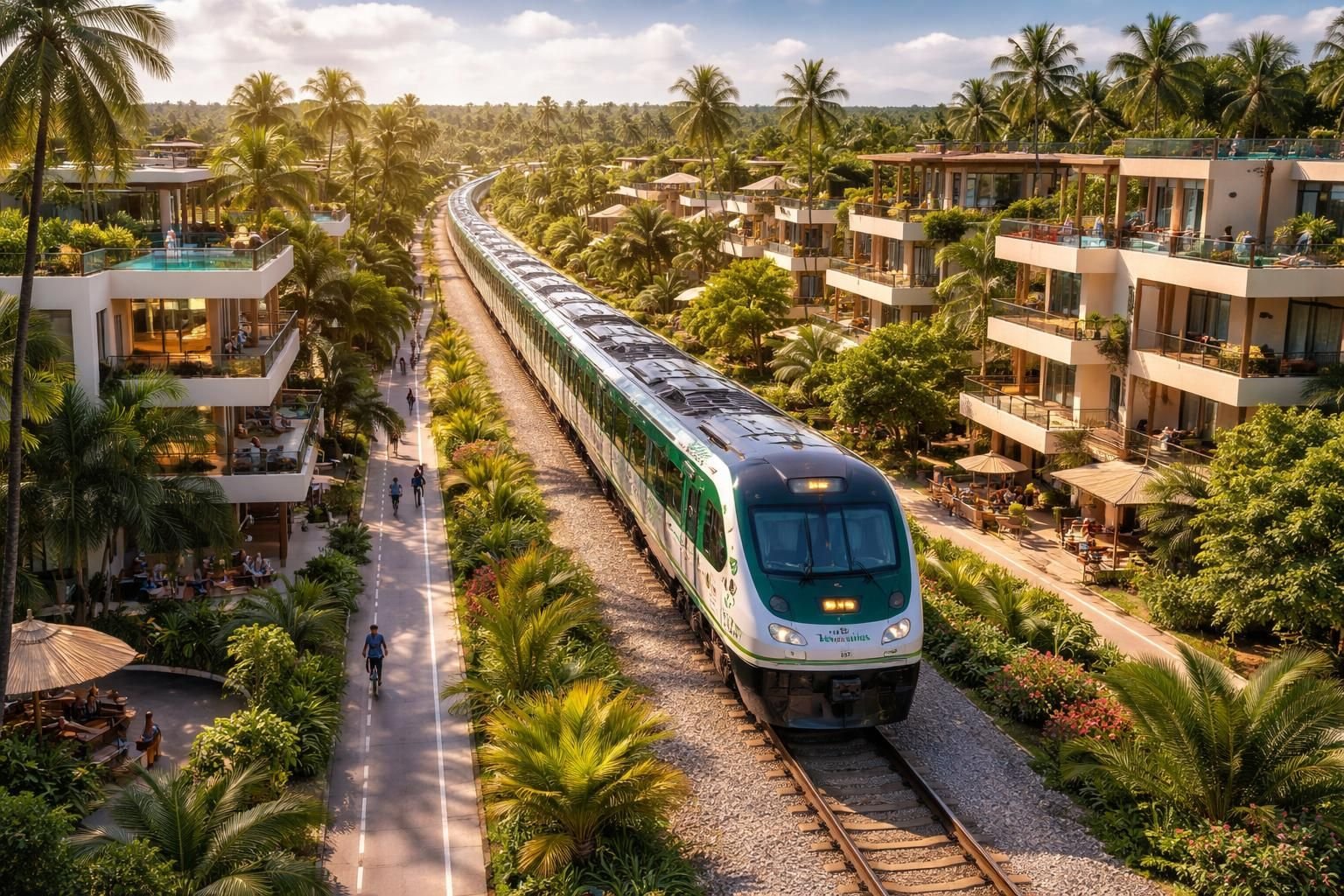
Regional Variations: Where the Maya Train Has Boosted Property Values
The Maya Train’s economic impact on real estate prices is nuanced, shaped by the maturity of existing property markets and the specific characteristics of each station’s catchment area. Well-established areas like Cancun have shown more modest gains since the train’s inauguration, typically ranging between 7% and 10% in annual appreciation, with localized spikes of 3-5% above the city average in neighborhoods near the station. Cancun’s market continues to offer high liquidity, making it ideal for investors seeking ease of asset turnover despite slower growth compared to emerging locations.
Meanwhile, Playa del Carmen stands out as a significant beneficiary due to its status as a top vacation rental hotspot. The station’s proximity—approximately a 15-minute walk from the famed Fifth Avenue—has led to property values appreciating between 8% and 12%. This accessibility has rekindled interest in northern Playa del Carmen districts, once considered peripheral but now within comfortable reach of transit, invigorating both pre-construction developments and luxury residential projects.
Puerto Morelos, once a quiet fishing village, reflects the transformative potential of the Maya Train for smaller communities. While still evolving, its coastal charm combined with train connectivity to Cancun and Playa del Carmen has fueled appreciation of 10-15% per year, a promising figure for buyers interested in medium-term capital growth in a less saturated market.
Tulum, arguably the most talked-about station corridor, combines train access with the recently operational Tulum International Airport, resulting in one of the Riviera Maya’s hottest real estate markets. With a combined appreciation in many neighborhoods estimated at 18-25%, this dual infrastructure surge presents an especially lucrative opportunity. The increase is concentrated most heavily in Tulum Pueblo areas near the train station, while the pricier Hotel Zone has been less influenced given typical tourist arrival patterns by car or shuttle.
Table: Estimated Annual Real Estate Appreciation by Maya Train Station
| Station | Market Profile | Estimated Annual Appreciation | Observed Impact vs. Comparable Areas |
|---|---|---|---|
| Cancún | Established Market, High Liquidity | 7-10% | +3-5% above city averages near station |
| Puerto Morelos | Emerging Coastal Town | 10-15% | Data developing |
| Playa del Carmen | High Vacation Rental Demand | 8-12% | +8-12% within 5 km radius |
| Tulum and Tulum Airport | Train + Airport Hub | 8-15% | +18-25% combined impact |
| Valladolid | Cultural Destination, Near Chichén Itzá | 12-18% | Emerging market |
| Bacalar | Emerging Natural Attraction | 15-20% | Long-term growth potential |
Other notable locales like Mérida-Teya and Izamal have begun tapping into greater demand thanks to the train’s cultural route. These areas appeal to investors with a preference for cultural tourism and lower entry prices. Though not immediate liquidity hubs, the long-term appreciation outlook is positive as rail connectivity enhances their profile and accessibility. This investment diversity is a valuable feature for portfolios seeking a mix of urban tourism and heritage-driven markets.
How Urbanization and Transportation Access Are Shaping Real Estate Trends
Urbanization influenced by transportation infrastructure is a powerful engine driving economic growth and property value increases. The introduction of the Maya Train is accelerating urban sprawl and new development across the Riviera Maya, transforming previously isolated zones into accessible and attractive investment destinations. This trend invites cautious optimism combined with strategic planning to harness the full benefits of this transformation.
Key urban corridors along the train line see a rise in mixed-use communities, residential complexes, and tourism-oriented developments. The train has shortened travel times between cities reducing dependency on congested highways and encouraging residents to consider locations once deemed too remote. In Tulum, for example, areas that featured limited access are now drawing both local and foreign buyers looking for vacation homes with efficient transit links.
Enhanced transportation access also supports the expansion of the vacation rental market. Investors targeting strong rental income gravitate toward stations like Playa del Carmen and Tulum, where tourism impact remains highest. The synergy between the Maya Train and increased tourist influx points to a promising outlook for vacation rental profitability, stimulating further real estate development centered on hospitality and leisure.
Yet, challenges remain. The “last mile” problem, notably the lack of integrated local transport options to and from many train stations, persists and could hinder some areas’ full appreciation potential. Taxis and colectivos are still required to cover station-to-property distances, which may deter some prospective residents or tourists unfamiliar with local transport nuances. Overcoming these hurdles is paramount to sustaining long-term real estate growth linked to the Maya Train.
For investors evaluating opportunities, it is essential to consider the local environment beyond the train itself: proximity to beaches, services, schools, and commercial centers all weigh significantly on property value. Combining this insight with the knowledge of the Maya Train’s corridor will allow buyers to identify promising properties that benefit from both infrastructure development and intrinsic real estate qualities.
Investment Strategies Linked to the Maya Train: What Buyers Should Know
Given the differential impact of the Maya Train on diverse localities, investors must tailor their strategies accordingly. If liquidity and rapid asset turnover are priorities, Cancun and Playa del Carmen’s established markets remain superior choices. Conversely, for those pursuing long-term capital appreciation with potentially higher returns, emerging towns like Bacalar, Valladolid, and Puerto Morelos present compelling options aligned with expectations of continued urbanization and economic growth.
Vacation rental investors find lucrative niches around Tulum and Playa del Carmen, where tourism impact is strongest, and transport access is boosted by the combined effect of the Maya Train and airports. However, buyers must analyze the micro-market carefully, as sub-areas within these towns can differ markedly in their appreciation trajectory.
Key investment considerations for buyers near the Maya Train:
- Proximity Matters: Prioritize properties within a 5 km radius of train stations for the best appreciation potential.
- Complementary Infrastructure: Areas featuring airports, highways, and urban amenities alongside the railway benefit most.
- Demand Profile Alignment: Choose based on investment goals — whether rental income, resale liquidity, or long-term appreciation.
- Last Mile Accessibility: Ensure reliable transportation options from the station to the property.
- Expert Local Guidance: Work with specialized agents familiar with nuanced micro-locations such as those discussed in our Playa del Carmen real estate agency guide.
Understanding the layered factors influencing property values alongside the Maya Train allows investors to navigate the Riviera Maya market with confidence. Beyond just being close to the train, discerning buyers focus on integrating all elements of urbanization, tourism impact, and local amenities to optimize their investment opportunity.
Real Estate Demand Dynamics and Market Indicators Near Maya Train Stations
Demand has shown a significant uptick around Maya Train hubs as evidenced by recent market data. Search queries using filters such as “near the train” have surged by over 187%, reflecting growing buyer interest in these locations. New developments are rising in response, with 34 projects launched within 3 kilometers of stations in the Riviera Maya alone.
Furthermore, market velocity provides insight into investor confidence. Properties near stations sell faster, averaging 3.8 months on the market, compared to 6.1 months elsewhere. Sellers near stations also command a price premium averaging 14%, confirming the tangible advantages of Maya Train proximity in negotiating power and valuation.
This trend is strongly tied to the tourist economy. Domestic tourism to destinations along the Maya Train route—such as the popular Mexico City to Tulum corridor—has increased, complementing international visitor flows and enhancing the market for vacation rentals and commercial properties alike.
Nevertheless, some limitations persist. Remote neighborhoods farther than 10 kilometers from stations see negligible price uplift, and the train has yet to solve transportation for the last mile to many localities. Moreover, certain high-end segments—like Tulum’s Hotel Zone—depend more on road transit, limiting the train’s influence on those premium property values.
By integrating infrastructure insights with demand and pricing data, investors can better evaluate where the Maya Train’s influence is most pronounced and act decisively in this evolving market. For example, exploring pre-sale market trends and pricing strategies featured in our analysis on how to price condos correctly in Playa del Carmen provides a crucial edge for buyers and sellers.
How many stations does the Maya Train have?
The Maya Train consists of 20 main stations and 14 additional stops, spanning over 1,554 kilometers across five southeastern Mexican states.
What is the distance range where the Maya Train impacts property values the most?
The strongest influence on real estate prices is found within a 5 km radius of stations, with a moderate effect between 5 and 10 km, and negligible impact beyond that range.
Are there still good investment opportunities near the Maya Train?
Yes, particularly in less mature markets such as Bacalar and intermediate stations where appreciation potential is high, though liquidity may still be developing.
How does the Maya Train affect vacation rental markets?
The train improves access to popular tourist destinations, boosting demand for vacation rentals in areas like Tulum and Playa del Carmen, increasing income potential for property owners.
What transportation challenges remain despite the Maya Train?
Last-mile connectivity is still a major issue, with many stations lacking integrated transport options, requiring additional travel via taxis or colectivos, which can impact the overall convenience for residents and tourists.